|
|
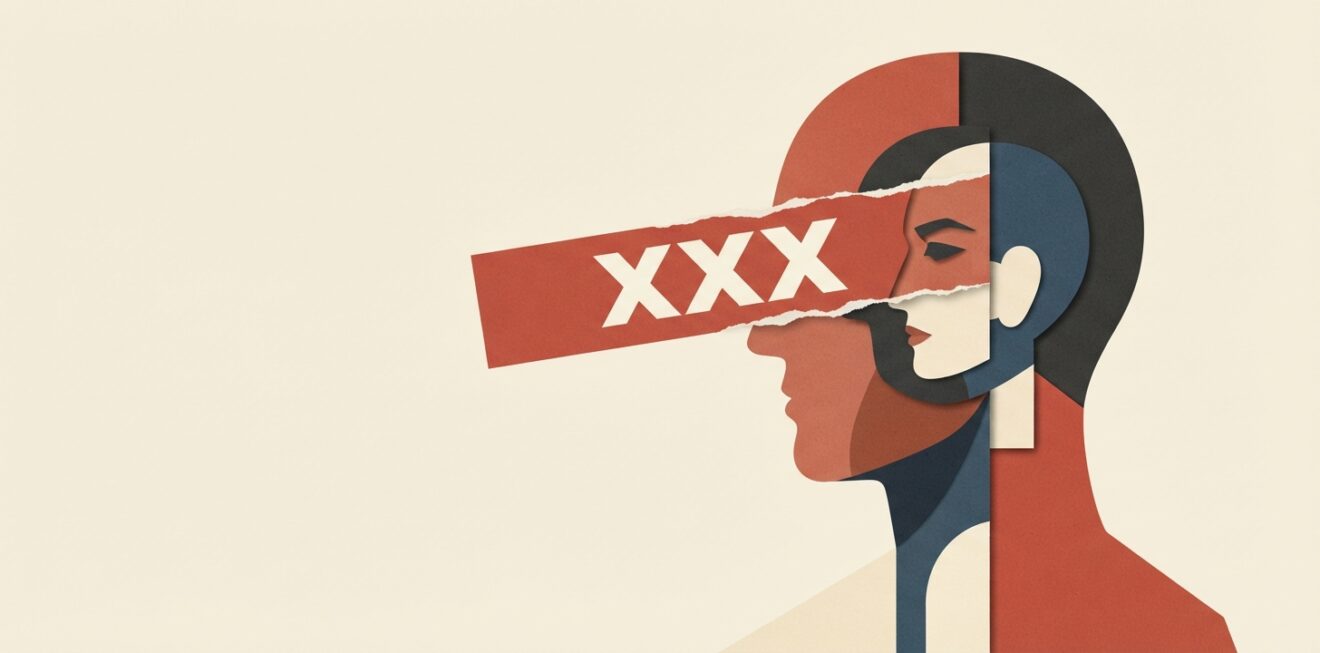
Harmful to Minors: the New Online Censorship Mantra
Welcome to the first newsletter of the Center for Online Safety and Liberty (COSL), a new nonprofit incubator for independent projects that build safer spaces, foster creativity, combat harm, and champion digital rights and freedom.
|
During this launch month we're helping to campaign against compulsory online ID checks, a relatively new obsession of online regulators across the United States and the world. Online ID check laws, also known as age verification or age assurance laws, require users to present identification before accessing certain websites—typically, but not always, defined as those that could be "harmful to minors".
|
However as you can read in our featured blog post below, the concept of "harmful to minors" doesn't simply refer to pornography as you might assume, but is much broader, including for example information about transgender healthcare, as well as much other legitimate and constitutionally protected speech. Cutting off access to this information isn't helping minors, and it isn't constitutional.
|
How is the concept of "harmful to minors" evolving, and how is it being used around the world to cut off access to knowledge, information, and community online? And if online ID checks aren't the answer, how else can we address the actual challenge of minors being exposed to age-inappropriate content? These are urgent questions, that we hope to shed some light on through several existing and upcoming COSL projects:
|
- Our first monthly featured project, Liberato, is a hosting platform for websites and virtual servers that adheres to our dual values of online safety and liberty. It upholds safety by providing several unique trust and safety tools and services to its members, including scanning for illegal content. But it also upholds liberty, by pushing back against requests to remove legal content or to give up its users' information.
- We soon plan to launch an open data repository, with a working title of "Harmful to Minors", that will contain examples of content removals and account bans where harm to minors is used as a rationale. The aim is to provide greater transparency around how that term is evolving, and to hold those who use it to a high standard of accountability. We're beta testing it now, and are inviting submissions from the public.
- We have several open source software projects designed to address the question: if online ID checks aren't the answer, how can we prevent minors (or anyone, really) being exposed to material that they find offensive? One such project, titled Dead Dove, enables website owners to tag content with warnings that hide potentially offensive content by default, while still allowing users who wish to see that content to override and customize those warnings.
-
|
We are now recruiting for a volunteer to manage a new advocacy campaign aimed at checking the misuse of the "harmful to minors" concept by politicians to censor sex education materials, fiction, art, and self-expression. The first responsibility of this volunteer will be to work in coalition with abuse survivors to develop and build support for a strong public statement that legal speech must never be conflated with real abuse materials, nor ever be criminalized and censored in the same way.
|
-
We're also launching a podcast on censorship this month, titled Beyond the Filter. Its pilot episode is out now, and you can subscribe to catch it and future episodes on your favorite listening app. The upcoming second episode of Beyond the Filter will look at Project 2025, a policy agenda for Donald Trump's second term developed by the conservative Heritage Foundation, which uses the term "harmful to minors" to include gender-diverse sex education.
|
|
That's a lot already, and it's been less than a month from our official launch! But there's a lot more still to come, and you can be a part of it. Continue reading this newsletter to get up to date with our most recent website publications, and to learn about how you can propose a project to come under COSL's fiscal sponsorship.
|
|
|
|
|
|

|
|

|
The Latest from Our Blog
|
|
|
Pornography, Harm, and the Limits of the Law
|
|
|
|
Mick Moran, chief executive of the Irish Internet Hotline and a board member of INHOPE, the international association of internet reporting hotlines, argued recently in the Irish Examiner that "'ordinary' porn is now a gateway to child sex abuse material". Recommendation systems, he writes, feed an appetite for novelty and taboo until some viewers cross from adult pornography into recordings of children being …
|
|
|
|
|
|
|
|
What Wattpad's New Rules and the Rush to AO3 Truly Reveal
|
|
|
|
When Wattpad quietly rewrote its content guidelines last month, its writers didn't wait around for the hammer to fall. Overnight, they began packing up their archives (years of stories, millions of words) and migrating them to Archive of Our Own (AO3). Wattpad had just banned stories "created primarily for sexual arousal." From the outside, it’s easy to dismiss this as …
|
|
|
|
|
|
|
|
Drawing the Line: Online Harm, Queer Expression, and Platform Governance in Asia-Pacific
|
|
|
|
October 6 at 10:15–11:15 NPT, 4:30 UTC, 14:30 AEST, 21:30 PST, October 7 at 0:30 EST Across the Asia-Pacific region, governments and online platforms are expanding systems intended to protect children and adults from "online harms", including pornography, AI-generated abuse, obscenity, extremism and disinformation. Yet these frameworks increasingly affect communities and forms of expression far beyond their original targets, often …
|
|
|
|
|
|
|
|
Medical School Berlin workshop
|
|
|
|
Perspectives on Child Sex Stories – A Panel DiscussionSeptember 28 at 7:00–9:30 BST, 8:00–10:30 CEST, 16:00–18:30 AEST, 23:00–1:30 PDT To date, little to no empirical research exists on text-based depictions of sexual interactions involving underage characters (for an overview, see Lehmann et al., 2025). From a theoretical point of view, these so-called child sex stories have been proposed as a protective factor (e.g. providing …
|
|
|
|
|
|
|
|
|
|
|
|
|
Special offer: Free domain from Liberato
|
Liberato, our first monthly featured project, began as an independent commercial enterprise, but it has become a non-profit project of COSL to coincide with our official launch. Why? Because as online platforms lurch to the right and their terms of service become less welcome to minorities, it's more important now more than ever before to have an alternative that is accessible to everyone.
|
|
Liberato is independent of major cloud providers, running its own website and virtual machine hosting from its own bare metal servers. It protects its users' privacy and their freedom of expression, while also providing free access to trust and safety tools such as automatic scanning for illegal content. Setting up your own website or server isn't for everyone, but for those with the interest in doing so, choosing independent host that prioritizes privacy, safety, and liberty is an investment worth making in uncertain times.
|
To make that investment just a little less, if you sign up for any web or virtual machine hosting annual plan, a free domain will be included.
|
|
|
|
|
|
|
|
|
|
|
|
|
Submit to our Transparency Archive
Very soon COSL will be launching its second monthly featured project, an open data repository titled "Harmful to Minors", to provide transparency around a new wave of bans and takedowns against content about sex and gender. We already have some examples in our archive, including a censored computer game, furry artwork, a ban against a support group, and even an ethnographic blog article that was taken down. But we would love to include some more examples.
|
|
If you've had content taken down by a social media platform or web host, or if you've faced an account ban, and you believe that the reasons given could use some public scrutiny, we encourage you to submit to our Harmful to Minors archive while we're finalizing it for its initial release. Click below to contribute.
|
|
|
|
|
|
|
|
|
|
|
|
How to propose a new COSL project
What makes COSL most different from other organizations is that our small team isn't trying to do it all ourselves. Instead, COSL is meant as an incubator for community projects that support our mission. If you're interested in advocating for change, hacking on a cool software project, or running a group, event, or fundraiser. proposing it to COSL as a supported project is a great way to get it off the ground.
|
There are several advantages of bringing your project under COSL's fiscal sponsorship. One is that it gives you an independent legal entity that you can use in grant applications, signing up for services, or receiving donations. And if your activities support our charitable objectives, money that you raise can be tax deductible. You also gain access to a growing network of supporters and volunteers, who can help make your project visible and sustainable.
|
However you plan to contribute, we're glad to have you along for the ride. Whether you're a creator, educator, coder, fan, or advocate, you belong here. Got an idea you'd like to pitch to us? We want to hear it.
|
|
|
|
|
|
|
|
|
|
Support our work!
Pledging your monthly support for our work is the best way that you can support us, because it gives us the stability to plan ahead. You can pledge your support at three levels.
|
|
|
|
|
|
|
|
|
|
Keep In Touch With Us
|
 
|
|
|
|
|
|